Concrete Leveling
Fix sunken and uneven concrete without the cost and disruption of full replacement.
Why Level Instead of Replace
When your concrete sinks or settles, your first thought might be to tear it out and start over. But replacement costs thousands of dollars more than leveling and takes much longer to complete. Concrete leveling raises your existing slab back to its original position in hours, not days, and costs a fraction of what you would pay for new concrete.
The concrete itself is still perfectly good. It sank because the soil underneath washed away or compressed over time. Once we stabilize the base and lift the slab, you get decades more use from concrete that already paid for itself. You avoid the hassle of demolition, disposal fees, and waiting weeks for new concrete to cure before you can use it.
Leveling also works better for the environment since you keep existing materials in place instead of sending tons of debris to landfills. Most homeowners find the quality restoration indistinguishable from new concrete once we finish. The repaired surface blends seamlessly with surrounding areas and handles the same loads as the day it was poured.
Here in Westland, MI, soil conditions frequently cause settling issues. Clay soils expand when wet and shrink when dry, creating voids under slabs. Poor drainage washes away supporting material. Tree roots displace soil as they grow. These problems affect driveways, sidewalks, patios, and garage floors throughout the area. Quick action prevents small problems from becoming major headaches.
How Concrete Leveling Works
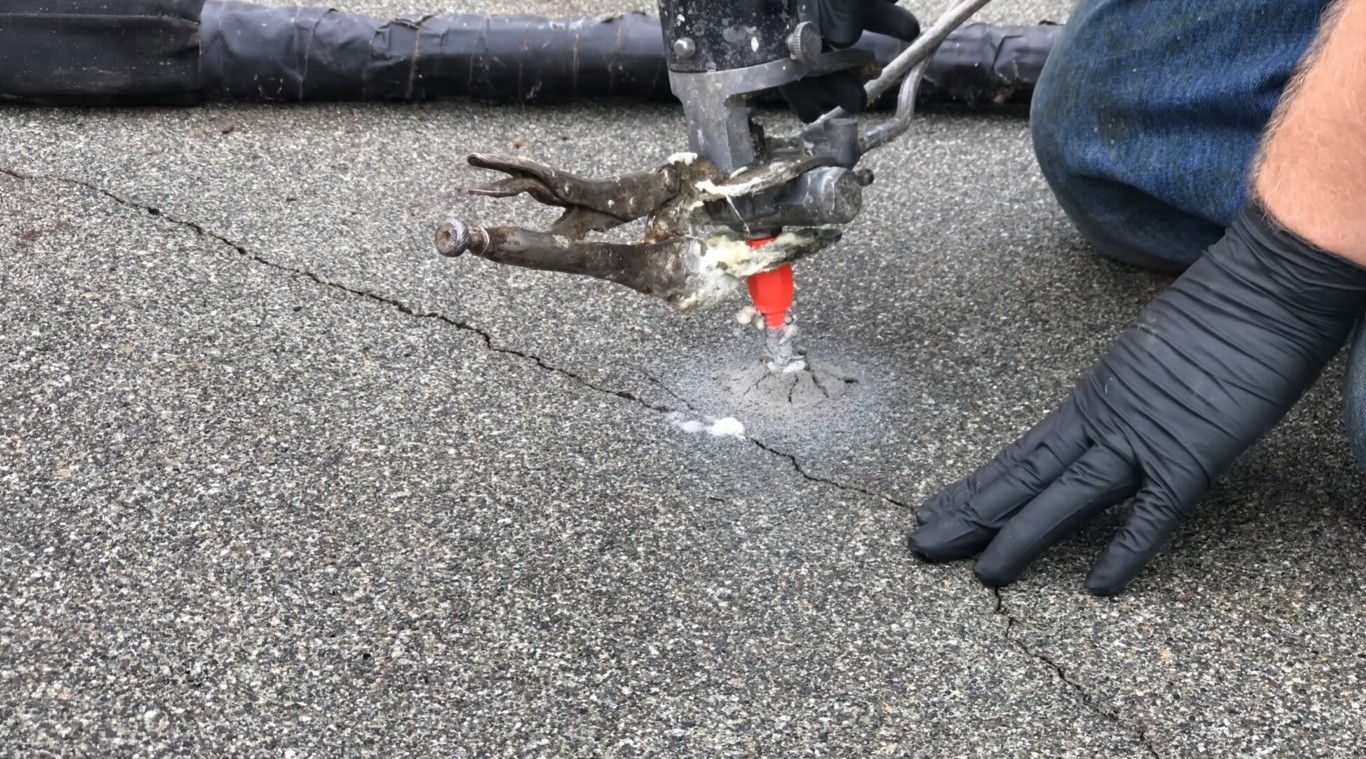
We use two proven methods depending on your specific situation. Mudjacking injects a cement-based slurry through holes drilled in the slab. The material flows into voids beneath the concrete and expands to lift the slab. Polyurethane foam injection works similarly but uses expanding foam instead of slurry. Both techniques raise concrete precisely to match adjacent surfaces.
The Leveling Process
- We drill small access holes through the sunken concrete at strategic locations
- Material gets pumped through the holes to fill voids and create lifting pressure
- We monitor the slab continuously and adjust injection to achieve precise height
- Once level, we patch the holes and clean the work area
- You can use the surface immediately after we finish
Mudjacking requires larger holes but costs less than foam injection. The slurry adds significant weight, so we use it mainly for driveways and other heavy-duty applications. Polyurethane foam weighs almost nothing and cures faster, making it ideal for interior floors and areas where weight matters. The foam also resists water washout better than traditional mud.
Both methods work well for our repair services in Westland. We evaluate your concrete thickness, soil conditions, and budget to recommend the best approach. Most residential jobs take just a few hours from start to finish, and you avoid weeks of disruption that come with replacement projects.
Common Applications
Concrete leveling fixes problems throughout your property. Sunken driveway sections create awkward transitions that scrape vehicle undercarriages. Settled sidewalk panels form trip hazards that put you at legal risk when visitors stumble. Tilted patio slabs direct water toward your foundation instead of away from it. Garage floors that slope toward living spaces allow water and fumes to migrate where they do not belong.
Safety and Liability Issues
Trip hazards cause thousands of injuries every year. When concrete settles even an inch or two, people catch their feet on the raised edge and fall. Elderly visitors face particular danger since falls often result in broken bones and long recovery times. Your homeowner insurance may not cover injuries if you knew about the hazard and did nothing to fix it.
Water damage from poor drainage costs even more than injury claims. When concrete slopes toward your house, rain and snowmelt flow against foundation walls. Over time, moisture seeps through cracks and saturates basement walls. Mold grows in damp conditions. Wood framing rots. Foundation repairs run tens of thousands of dollars if water undermines structural supports.
We also level concrete around pools, which presents unique challenges. Pool decks must slope away from the water to prevent deck drainage from contaminating the pool. Settled sections direct runoff into the pool instead, adding dirt and chemicals that throw water chemistry out of balance. Proper leveling protects both your investment in the pool and the enjoyment you get from it.
Commercial properties benefit from leveling too. Warehouse floors, loading docks, and parking lots all settle over time. Uneven surfaces damage forklifts and pallet jacks. Customers notice poor pavement conditions and wonder about your attention to detail in other areas. Quick commercial concrete leveling maintains professional appearances and prevents liability claims.