Concrete Slab & Foundation Work
Structural concrete foundations and slabs built to support your building for generations.
Understanding Different Foundation Systems
Your foundation is the most critical component of any structure. It transfers all the weight of your building to the ground and protects against settling, moisture intrusion, and structural movement. Get the foundation wrong and every other part of your project suffers. We specialize in several types of concrete foundation systems, each suited to specific applications and soil conditions.
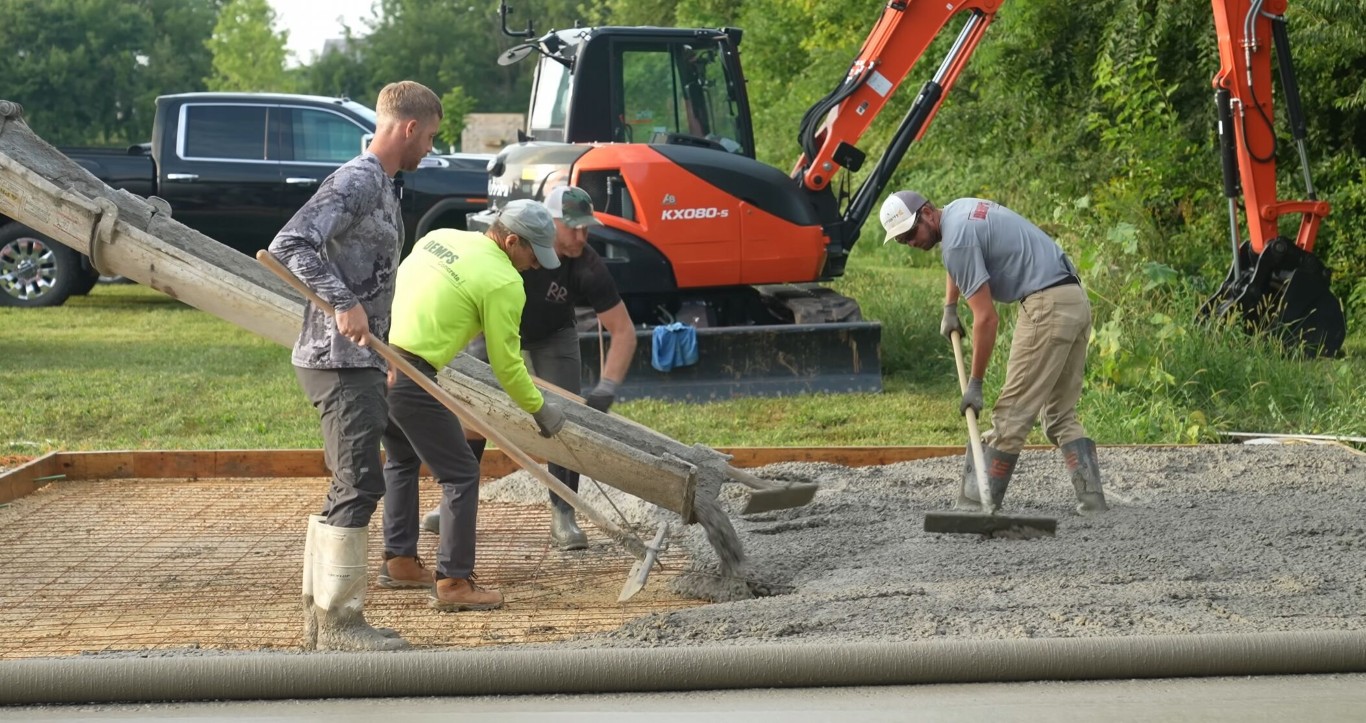
Slab-on-grade foundations work well for garages, sheds, and single-story additions. The concrete slab serves as both the foundation and the floor. We excavate to stable soil, install a gravel base for drainage, place vapor barrier to prevent moisture migration, then pour a reinforced concrete slab. Proper thickness depends on the building loads, but residential slabs typically run four to six inches thick with thickened edges that extend below frost depth.
Frost Wall Foundations for Michigan Climate
Michigan building codes require foundations to extend at least 42 inches below finished grade to get below the frost line. Frost wall foundations combine poured concrete walls with a concrete slab floor. We excavate footings to proper depth, install forms, place rebar reinforcement, and pour the walls. After the walls cure, we backfill the exterior, install crushed stone base inside, and pour the slab.
This foundation type works for most residential and light commercial buildings. The concrete walls resist soil pressure and provide attachment points for floor framing. The slab floor offers a durable, level surface for finished flooring. Proper waterproofing on the exterior walls and good drainage around the perimeter prevent moisture problems in the basement or crawl space.
Common applications for foundation work include:
- New home construction and room additions
- Detached garages and workshop buildings
- Pole barns and agricultural structures
- Commercial building pads and warehouse floors
- Equipment foundations for HVAC units and generators
- Basement floors and foundation repairs
- Shed and storage building slabs
- Grain bins and silo foundations
When you need reliable concrete foundation contractors, our team brings decades of experience in structural concrete work. We follow building codes, work with engineers when required, and deliver foundations that support your structure for the long term.
Why Site Preparation Makes or Breaks Your Foundation
Foundation failures almost always trace back to poor site preparation or unsuitable soil conditions. Clay soils expand when wet and shrink when dry, creating movement that cracks foundations. Organic topsoil compresses under load and causes settling. Loose fill material needs proper compaction or it will settle over time. We evaluate soil conditions before starting any foundation project.
If soil tests reveal problems, we have several options. Remove unsuitable material and replace it with engineered fill that gets compacted in lifts. Install deeper footings that bear on stable soil below problem layers. Use stone columns or other ground improvement techniques to stabilize soft soils. Sometimes the solution is as simple as proper drainage to keep water away from the foundation area.
Excavation, Grading, and Drainage
Precise excavation saves time and money on foundation projects. We dig footings to exact depth and width specified by your plans or building code. Over-excavation wastes concrete. Under-excavation leaves you below code requirements. Our operators have the skill and equipment to hit grade within an inch of target depth.
Grade the site to direct water away from your foundation. Standing water creates hydrostatic pressure against foundation walls and can cause leaks or structural damage. We install perimeter drains around footings when needed to channel groundwater away from the structure. Proper grading and drainage prevent most moisture problems before they start.
Base material under slabs needs attention to detail. We specify crushed stone rather than round gravel because angular particles lock together and resist movement. The base gets installed in two to three inch lifts and compacted with heavy equipment between lifts. This creates a firm platform that will not settle under the weight of the concrete and building loads.
Whether you need a simple garage slab or complex commercial foundation, the principles remain the same. Start with stable soil, build up proper base materials, ensure good drainage, and place reinforced concrete to engineering standards. Skip any of these steps and you compromise the entire structure.
Building Strength Into Every Foundation
Foundation concrete must meet higher strength requirements than decorative flatwork. We typically specify 3500 to 4000 PSI concrete for residential foundations and 4500 PSI or higher for commercial work. The concrete includes proper air entrainment to resist freeze-thaw damage. Water-cement ratios stay low to maximize strength and minimize shrinkage cracking.
Steel reinforcement handles tensile forces that concrete cannot resist on its own. Footings get horizontal rebar placed continuously around the perimeter. Foundation walls use vertical and horizontal rebar tied together in a grid pattern. Slabs need wire mesh or rebar depending on thickness and loading. The reinforcement placement and overlap distances follow specific code requirements that ensure structural integrity.
Curing and Protection for Maximum Strength
Concrete gains strength slowly over time as chemical reactions between cement and water create solid bonds. The concrete reaches about 70 percent of its final strength in seven days and continues hardening for months. Proper curing maintains adequate moisture and temperature during this critical early period.
We protect fresh concrete from rapid drying, freezing temperatures, and physical damage. In hot weather, we apply curing compound or cover the surface with plastic sheeting to retain moisture. Cold weather requires insulated blankets or heated enclosures to maintain proper temperatures. These precautions cost extra time and materials but ensure your foundation develops full design strength.
Expansion joints and control joints manage cracking in large slabs. We place joints at regular intervals to create weak points where the concrete will crack in straight lines rather than random patterns. Expansion joints around the perimeter allow the slab to expand and contract with temperature changes without creating stress. Joint placement follows specific guidelines based on slab dimensions and thickness.
For projects requiring additional structural work, we coordinate with our masonry and retaining wall services to provide complete foundation solutions. If you need repair work on existing foundations, check our concrete repair and replacement services for restoration options.
Common Questions About Foundation Work
Planning a new building or addition that needs a solid foundation?
Call (734) 821-2858 for a Free Quote