Stamped & Decorative Concrete
Get the upscale look of stone, brick, or pavers at a fraction of the cost with stamped concrete.
Why Stamped Concrete Beats Real Pavers
Stamped concrete creates realistic patterns that mimic natural stone, brick pavers, slate, flagstone, and even wood planks. The finished surface looks remarkably similar to expensive materials but costs significantly less to install. You also avoid the maintenance headaches that come with actual pavers like weed growth in joints, individual unit settling, and ant hills disrupting the surface.
Real stone pavers can run two to three times the cost of stamped concrete for comparable square footage. Brick pavers fall somewhere in between but still cost more than stamped patterns. When you factor in long-term maintenance, the cost difference grows even wider. Pavers need periodic releveling as individual units settle unevenly. Sand between joints washes out and requires replacement. Weeds and grass grow in the joints and need constant attention.
The Advantages of Seamless Surfaces
Stamped concrete creates a monolithic surface without the individual joints found in paver installations. This eliminates the weak points where pavers separate and settle independently. Your entire driveway, patio, or walkway moves as one unit. No gaps develop where trip hazards can form. Snow removal becomes easier without catching the plow edge on uneven pavers.
Here is what makes stamped concrete a smart choice for your property:
- Costs 40 to 60 percent less than natural stone or premium pavers
- Installs faster than laying individual pavers or stones
- No joints where weeds can grow or pavers can settle
- Easier to snow plow and maintain during Michigan winters
- Unlimited pattern and color combinations available
- Can replicate textures impossible to achieve with real pavers
- Provides all the structural benefits of standard concrete
- Easy to seal and maintain for lasting appearance
When you choose professional stamped concrete installation, you get the best of both worlds. Your surfaces look like expensive natural materials but deliver the durability and easy maintenance that concrete is known for.
Endless Design Possibilities for Your Project
Stamped concrete patterns range from simple geometric shapes to complex natural stone replicas. Popular choices include ashlar slate that mimics cut stone with irregular rectangular shapes, cobblestone that creates an old-world European look, and random stone patterns that resemble natural flagstone. We also offer brick patterns, wood plank textures, and tile designs that work well for specific applications.
Pattern selection should complement your home architecture and existing landscaping. Traditional homes look great with brick or cobblestone patterns. Modern designs benefit from clean geometric patterns or smooth ashlar slate. Rustic properties work well with random stone or wood plank textures. We help you choose patterns that enhance your property rather than clash with the existing style.
Color Systems That Last
We use two color application methods for stamped concrete. Integral color gets mixed throughout the concrete and provides consistent base color that will not wear off. Color hardener applied to the surface during stamping adds depth and variation that mimics natural stone. Antiquing release agents create highlights and shadows in the stamped texture for a more realistic appearance.
Earth tones work best for most applications because they hide dirt and blend naturally with landscaping. Popular colors include tan, brown, terra cotta, charcoal, and sandstone shades. You can combine multiple colors in borders, accent bands, or contrasting field areas for added visual interest. The color should complement your home exterior and coordinate with surrounding hardscaping elements.
Sealing stamped concrete enhances the color and protects the surface from staining, moisture damage, and wear. We apply a high-quality acrylic or polyurethane sealer after the concrete has cured. The sealer makes colors pop and adds a subtle sheen that resembles wet stone. Plan to reseal every two to three years to maintain optimal appearance and protection.
For simpler decorative options, check out our standard concrete driveway services with colored or textured finishes. If you are interested in outdoor living spaces, our concrete patio installation team can incorporate stamped patterns into your backyard design.
The Art and Science of Stamping Concrete
Stamped concrete requires significantly more skill than standard flatwork. The timing must be perfect. Stamp too early and the concrete bleeds water that ruins the texture. Wait too long and the concrete hardens too much to accept a clean impression. We monitor the concrete constantly and begin stamping at exactly the right moment for best results.
Site preparation follows the same standards as any quality concrete work. We excavate to stable soil, install and compact base material, set proper grades for drainage, and place reinforcement. The concrete mix needs adequate strength and workability for stamping. We typically use 4000 to 4500 PSI concrete with lower slump than standard flatwork so it holds texture better.
Color Application and Stamping Technique
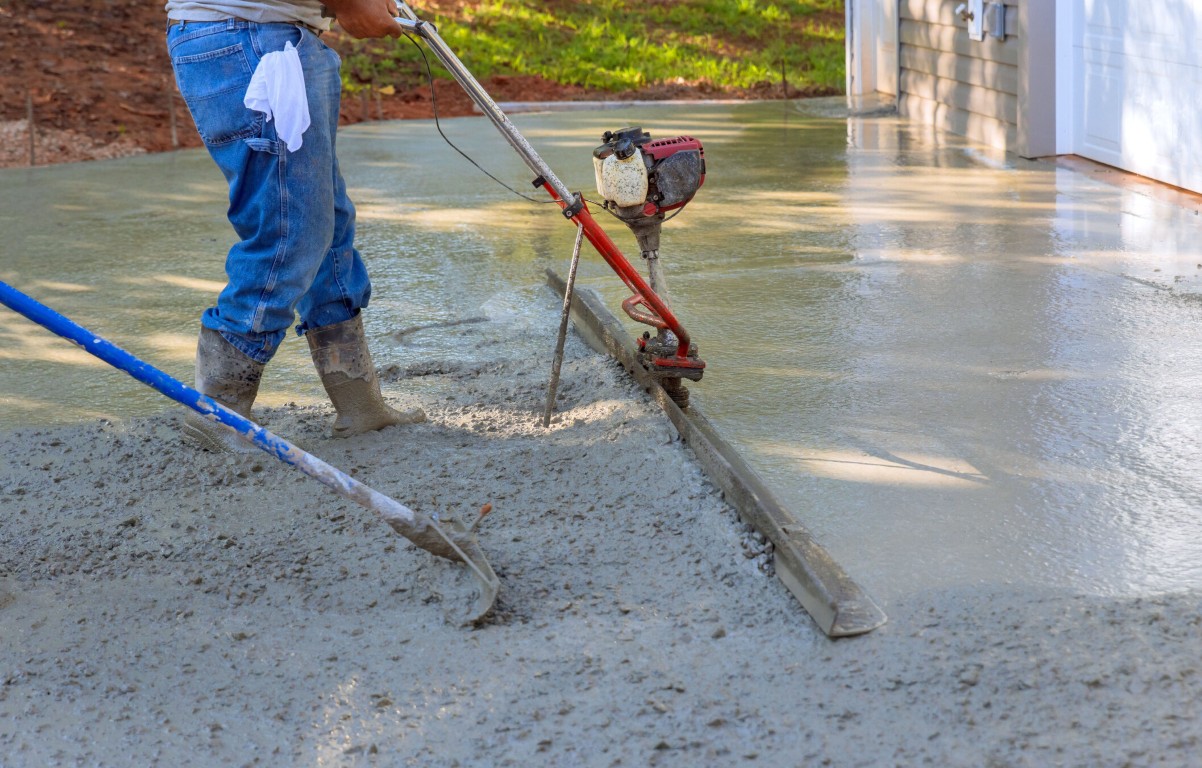
After pouring and screeding the concrete to proper elevation, we apply color hardener to the surface. This powder gets broadcast evenly and floated into the surface to create the base color and add surface hardness. Multiple colors can be applied in layers for depth and variation. Release agents prevent the stamps from sticking to the concrete while adding antiquing color to the texture lines.
Stamping requires coordination between crew members working quickly before the concrete sets. We press heavy stamp mats into the surface in a planned sequence that creates continuous patterns without obvious seams. Each stamp must align perfectly with adjacent stamps to maintain pattern integrity. Edges and detail areas need hand tools to complete the texture where large mats will not fit.
After stamping, the concrete needs several hours to harden before we can walk on it to remove residual release agent. We pressure wash the surface to reveal the final colors and texture. Control joints get cut with a saw at strategic locations to control cracking. Finally, we apply sealer to lock in the color and protect the surface. The entire process from pour to seal typically takes two to three days depending on weather and project size.
Proper installation makes the difference between stamped concrete that looks amazing for decades versus work that fades, peels, or cracks within a few years. We take pride in delivering results that exceed your expectations and stand up to real-world use.
Common Questions About Stamped Concrete
Ready to upgrade your concrete with beautiful stamped patterns and colors?
Call (734) 821-2858 for a Free Quote