Concrete Patios
Create an outdoor living space that handles Michigan weather without the maintenance headaches of wood decks.
Why Concrete Patios Outlast Wood Decks
Wood decks look great when they are new, but keeping them that way requires constant work. Staining, sealing, replacing rotted boards, and fixing loose fasteners become annual chores. Pressure-treated lumber might last 15 years if you stay on top of maintenance. Cedar and composite materials cost significantly more upfront and still need regular cleaning and maintenance to prevent mold, fading, and warping.
Concrete patios eliminate those headaches. You get a solid surface that will not rot, warp, splinter, or attract termites. Michigan winters and humid summers do not damage properly installed concrete. Rain, snow, and ice wash right off without penetrating the surface. You can set up patio furniture, grills, and fire pits without worrying about load limits or hot embers burning through the surface.
The True Cost Comparison Over Time
Let us talk about real numbers. A wood deck might cost less initially, but factor in the maintenance over 20 years. You will spend thousands on stain, sealer, and replacement boards. You will also invest countless hours of labor or pay contractors to do the work. A concrete patio costs more upfront but requires minimal maintenance. Seal it every few years and it lasts 30 to 50 years with no major repairs.
Here is what makes concrete patios worth the investment:
- No annual staining or sealing required to prevent decay
- Resistant to moisture damage, rot, and insect infestation
- Handles heavy furniture, grills, and outdoor equipment without sagging
- Fire-resistant surface safe for fire pits and outdoor cooking
- Easy to clean with just a hose or pressure washer
- Does not splinter or create hazards for bare feet
- Can be customized with colors, textures, and patterns
- Increases home value more than comparable wood deck
When you work with professional concrete contractors, you get a patio built to last. We handle proper site preparation, correct concrete thickness, and appropriate reinforcement so your patio withstands decades of use without major problems.
Designing Your Perfect Outdoor Space
Your patio should fit how you actually use your backyard. Some people want a simple rectangular slab for a table and chairs. Others need a larger multi-level space with areas for dining, lounging, and cooking. We work with you to design a layout that makes sense for your property and lifestyle.
Size matters when planning a patio. A small 10 by 10 foot square barely fits a bistro table and two chairs. Most families need at least 12 by 16 feet for a standard dining set with room to move around. If you want space for multiple activity zones, consider 16 by 20 feet or larger. We help you determine the right size based on your furniture plans and how many people you typically entertain.
Creating Visual Interest with Texture and Color
Plain gray concrete works fine if you want basic functionality at the lowest cost. But for a few dollars more per square foot, you can have a patio that looks significantly more interesting. Broom finishes create texture that provides slip resistance and hides minor surface imperfections. Exposed aggregate reveals decorative stone in the concrete for a natural appearance that coordinates well with landscaping.
Integral color mixed throughout the concrete comes in earth tones like tan, brown, terra cotta, and charcoal. These colors hide dirt and stains better than gray while adding warmth to your outdoor space. You can also combine multiple colors in borders or geometric patterns for a custom look. Stamped concrete creates the appearance of stone, slate, or brick pavers at a fraction of the cost of actual stone work.
Many homeowners choose stamped concrete patios because they provide upscale aesthetics without the maintenance issues of real pavers. You get the look of expensive natural stone with the durability and easy maintenance of concrete. Stamping also lets us create curved borders, contrasting accent bands, and other design elements that would be difficult or expensive with other materials.
How We Build Patios That Last
Proper site preparation makes the difference between a patio that lasts 30 years and one that cracks and settles within five. We start by removing sod, topsoil, and any organic material down to stable subsoil. Organic matter decomposes over time and creates voids under the concrete. That leads to settling, cracking, and eventual failure of the slab.
Next comes establishing proper grade and drainage. Your patio needs to slope away from your house at a minimum rate of one quarter inch per foot. This ensures water runs off the surface instead of pooling or flowing toward your foundation. We use laser levels and string lines to set exact grades that direct water where you want it to go.
Base Material and Compaction
The base under your patio supports the concrete and prevents settling. We install a minimum four-inch layer of compacted gravel or crushed stone. This material gets placed in two-inch lifts and compacted with a plate compactor between each lift. Proper compaction is critical. Loose base material will settle under the weight of the concrete and create voids that lead to cracking.
Concrete for patios should be at least four inches thick. We use steel reinforcement in the form of rebar or wire mesh to control cracking. The concrete mix includes air entrainment which creates microscopic air bubbles throughout the material. These bubbles allow the concrete to expand and contract during freeze-thaw cycles without damage. This is especially important in Michigan where temperature swings are extreme.
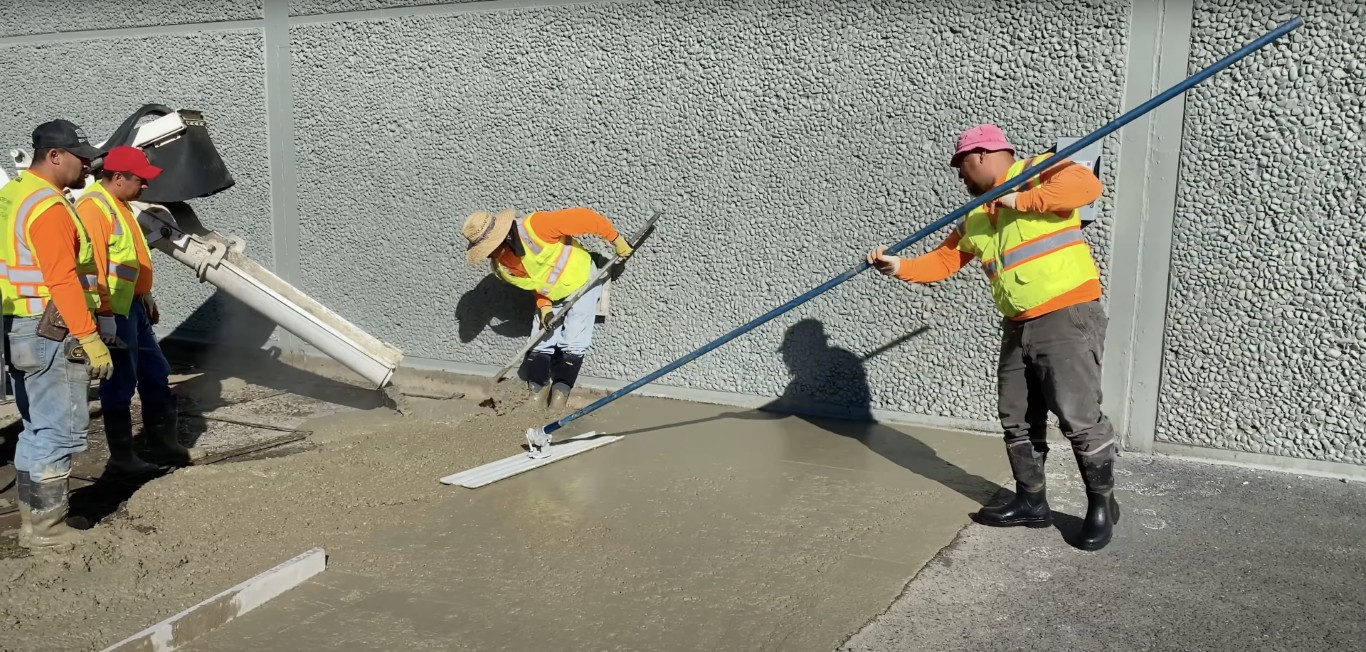
After pouring, we use power trowels and hand tools to create a smooth, level surface with your chosen finish. Control joints get placed at regular intervals to direct cracking where it will not be visible. Finally, we apply curing compound to ensure the concrete develops full strength. You can walk on your new patio after 24 hours, but we recommend waiting a full week before placing heavy furniture or other loads on the surface.
If you need repair work on existing concrete rather than a new installation, check out our concrete repair services to restore damaged areas.
Common Questions About Concrete Patios
Ready to transform your backyard with a custom concrete patio?
Call (734) 821-2858 for a Free Quote